.webp)
Standard delivery charges apply.
Secure handling guaranteed.
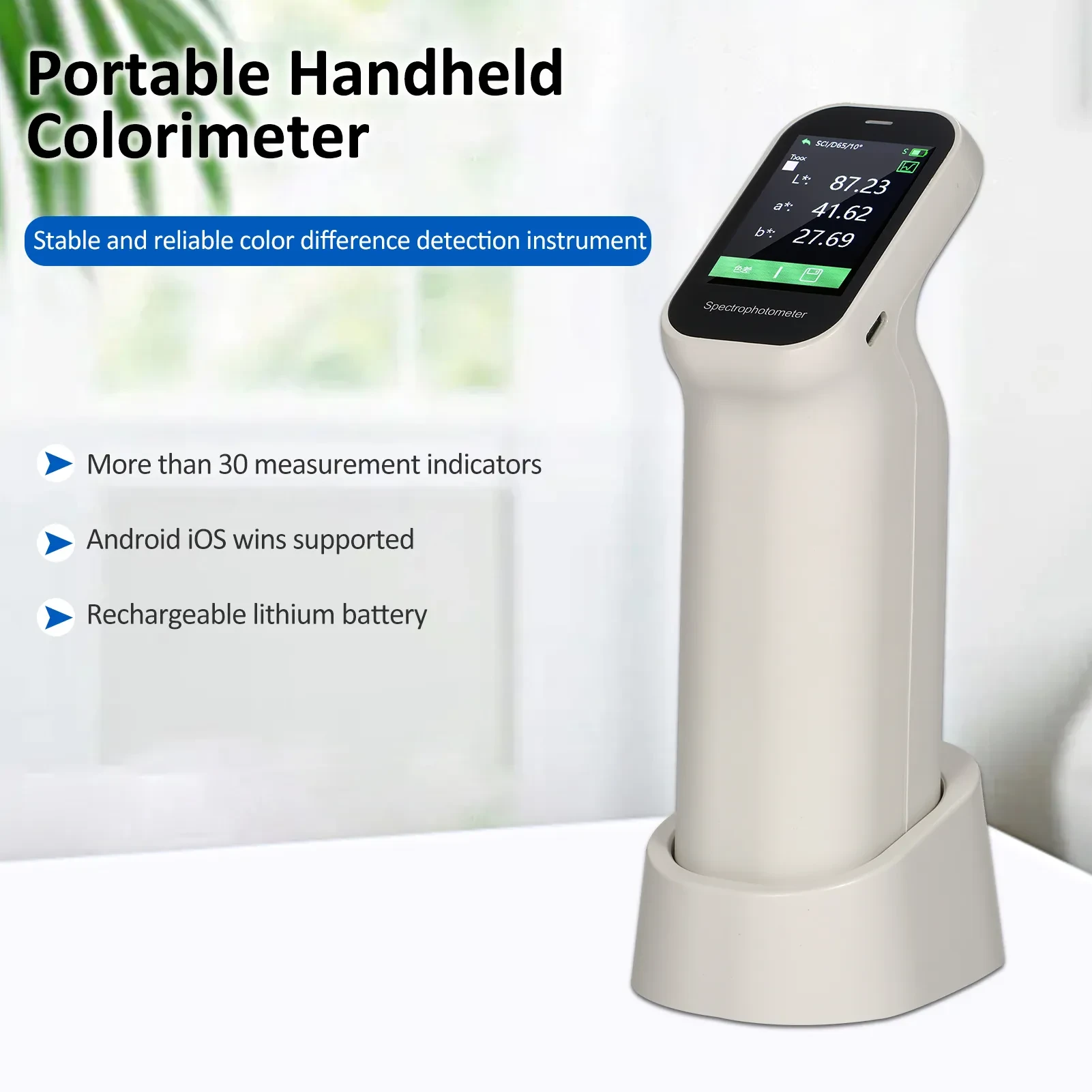
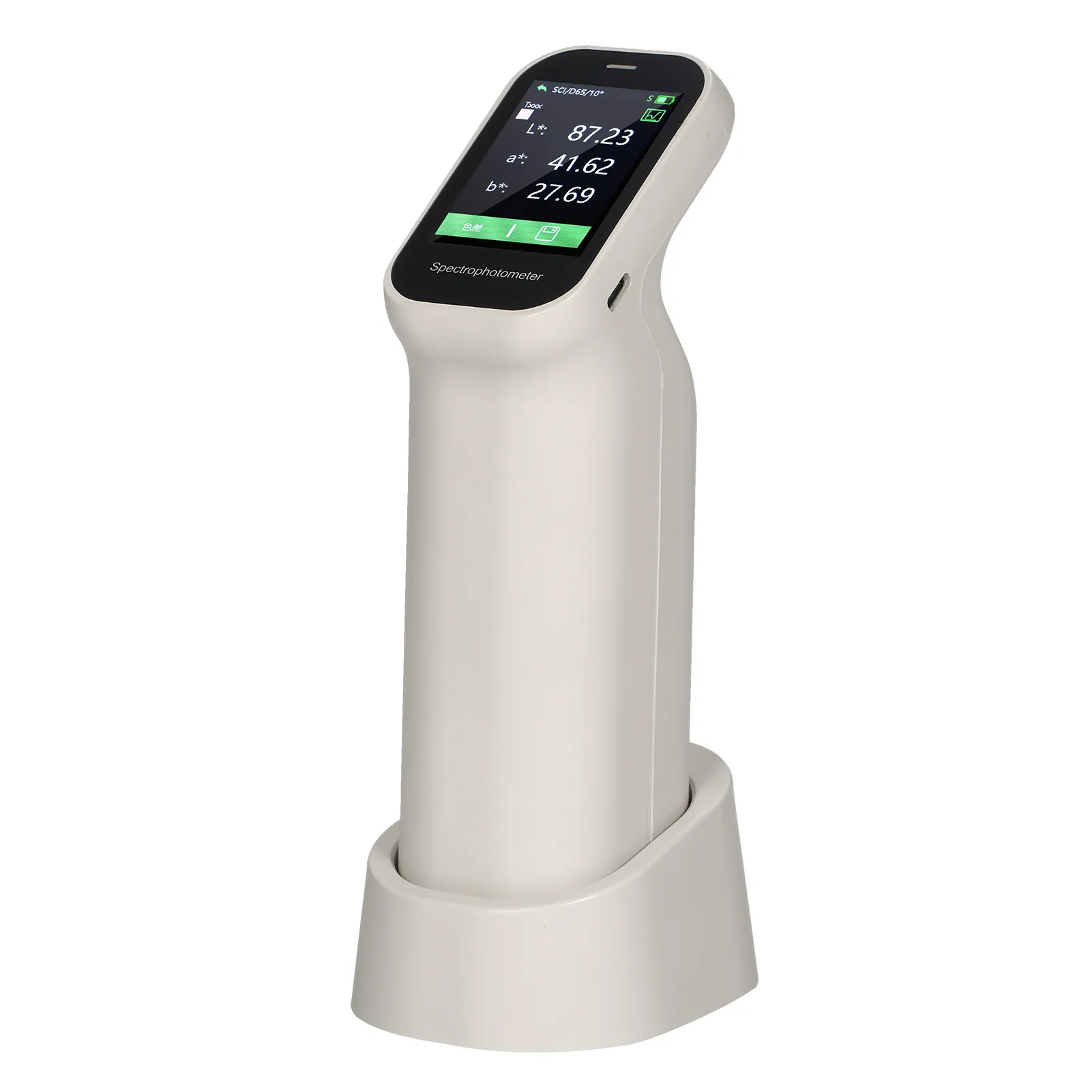
Digital Handheld Spectrophotometer Colorimeter is a precision instrument built for anyone who needs consistent, reliable colour measurement across materials, surfaces, and production environments. Whether you're working in printing, coatings, textiles, or quality control, this device brings lab level accuracy into a compact handheld format. The 2.4 inch IPS touchscreen makes navigation simple, while the D8 optical geometry ensures consistent readings under standardised conditions. With a fast measurement time of around one second and support for Bluetooth and USB data transfer, it fits neatly into modern workflows where speed and accuracy matter.
In real terms, this tool helps eliminate guesswork in colour matching. It measures across the visible spectrum from 400 to 700 nanometres with fine intervals, allowing you to detect subtle differences that the human eye might miss. The high repeatability ensures results remain consistent across multiple tests, which is critical in environments like manufacturing or design studios. Built with portability in mind, it runs on a rechargeable 3000mAh lithium battery with Type C charging, making it practical for both lab benches and field use.
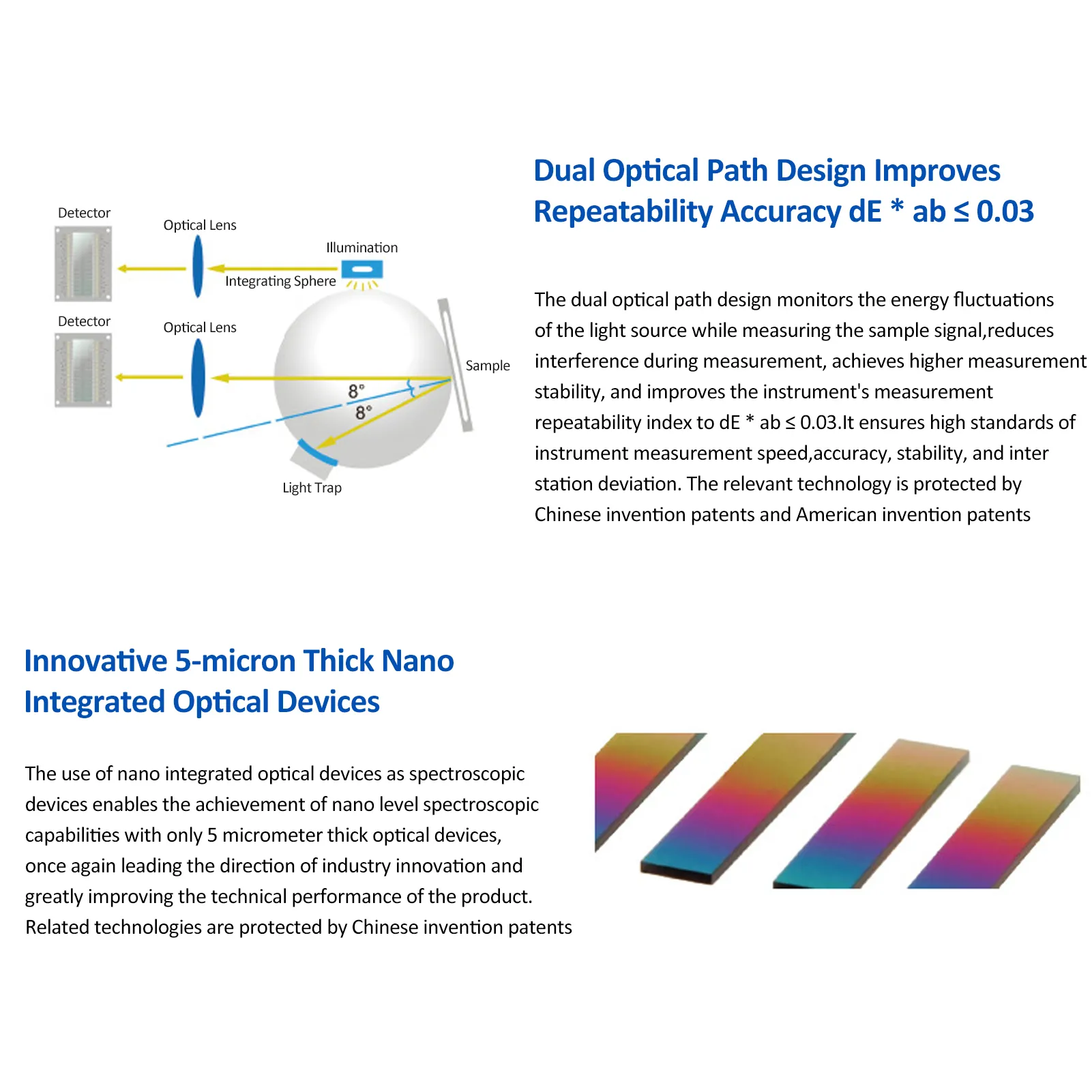
Accuracy sits at the core of this Digital Handheld Spectrophotometer Colorimeter, and the D8 optical geometry plays a key role here. By combining diffused illumination with an eight degree viewing angle, the device reduces surface reflection inconsistencies. This is particularly useful when measuring glossy or semi reflective materials such as painted panels, plastic housings, or coated fabrics. In industries like automotive refinishing or packaging, this consistency helps ensure colour matching remains within strict tolerances.
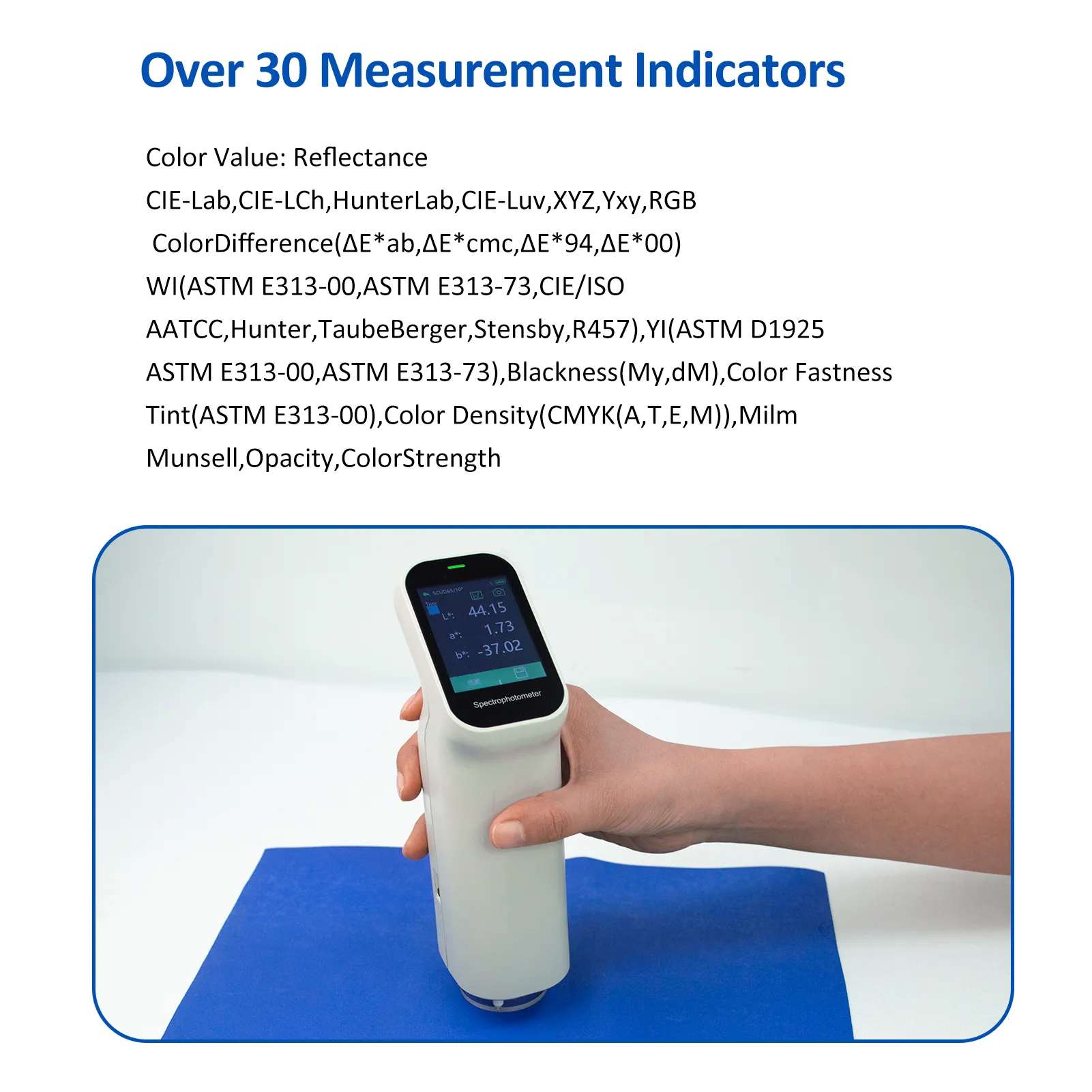
The IPS touchscreen display provides a clear and responsive interface. Unlike older monochrome displays, the full colour screen improves readability and makes data interpretation far more intuitive. You can view results, navigate menus, and manage settings directly on the device without needing external software. This is especially helpful when working on site where quick decisions are required and laptop access is limited.
Another standout aspect is the rapid measurement capability. With a response time of approximately one second, the device supports efficient workflows in environments where multiple samples need to be tested in succession. From print proofing to textile batches, this speed allows professionals to maintain productivity without sacrificing accuracy.
Data connectivity is handled through both USB and Bluetooth, giving flexibility in how results are recorded and shared. Whether you're transferring data to a computer for analysis or syncing with compatible devices, this connectivity supports integration into broader colour management systems. This is often paired with colour matching software or quality assurance platforms used in industrial settings.
Battery performance also matters in portable instruments. The built in 3000mAh lithium battery provides extended operating time, while Type C charging ensures modern compatibility and faster recharge cycles. This makes the unit practical for mobile technicians, inspectors, or designers who move between locations throughout the day.
Repeatability is another critical metric, with Delta E*ab values at or below 0.03. In practical terms, this means the device delivers highly consistent readings across repeated tests. For industries where tolerances are tight, such as paint formulation or product branding, this level of repeatability supports reliable decision making and reduces costly errors.
This device is well suited to professionals in colour critical industries. Print technicians working in packaging and signage will appreciate the ability to verify colour accuracy against brand standards, especially when dealing with CMYK and spot colour systems. Having a portable spectrophotometer on hand allows them to validate output directly on site rather than relying solely on central lab equipment.
Manufacturers involved in plastics, coatings, or textiles will also find strong value here. Quality control teams can use the Digital Handheld Spectrophotometer Colorimeter to inspect incoming materials or finished goods, ensuring consistency across batches. This is particularly important when working with suppliers, where slight colour variations can impact product uniformity.
Designers and product developers benefit as well. When prototyping new products or evaluating samples, accurate colour measurement helps align physical outputs with digital designs. This reduces iterations and improves communication between design teams and production partners.
Even small business owners in printing or custom merchandise can make use of this tool. For those producing custom apparel, signage, or branded items, maintaining consistent colour output helps build customer trust and reduces rework. It’s a practical tool that fits into both professional studios and smaller workshop environments.
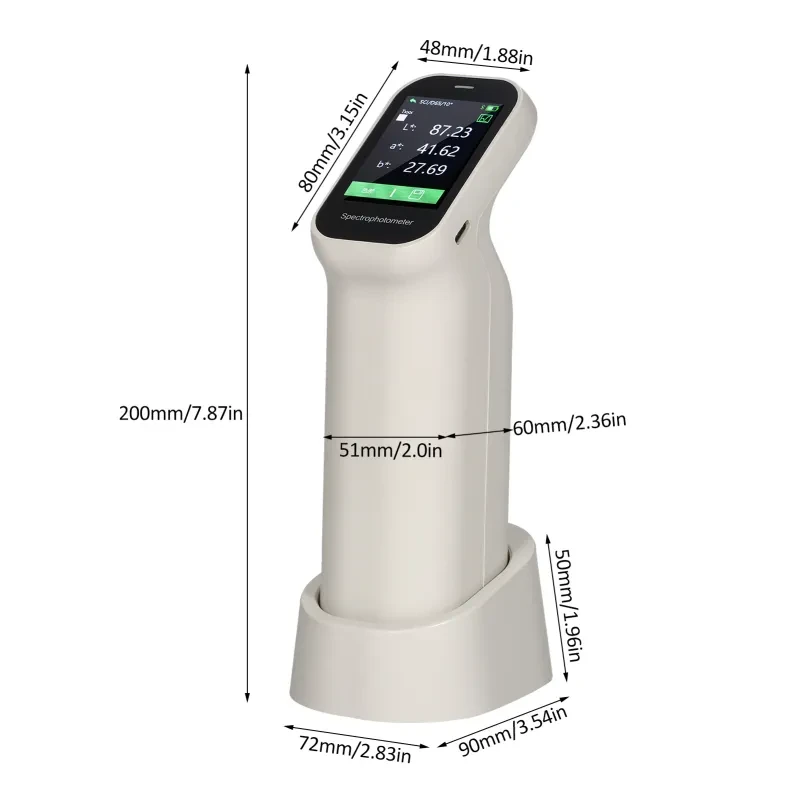
Inside the package, you receive the handheld spectrophotometer unit along with its standard accessories ready for immediate use. The device features a compact ergonomic design that supports one handed operation, making it comfortable during extended use.
Specifications include:
Portable spectral colorimeter model type
2.4 inch IPS full colour touchscreen display
6mm test aperture for focused measurements
D8 optical geometry with SCI measurement mode
Wavelength range from 400 to 700 nanometres with 10 nanometre intervals
Repeatability of Delta E*ab less than or equal to 0.03
Measurement time approximately one second
3000mAh rechargeable lithium battery with Type C charging
USB and Bluetooth connectivity for data transfer
This combination of hardware and measurement precision ensures the device is suitable for both lab environments and field applications where reliable colour data is required.
At GiftDeal Australia, we focus on supplying tools that genuinely support professionals and creators across the country. Since 2020, we have built a catalogue that reflects real world needs, including instruments like this spectrophotometer that demand accuracy and consistency. Every product is selected with usability in mind, so you can trust that what you receive aligns with practical workflows rather than just specifications on paper.
Our team understands the importance of reliable delivery and responsive support, especially for technical equipment where timing can matter.
Whether you're upgrading your workshop or equipping a quality control team, we aim to provide a straightforward buying experience backed by
local service. That approach helps you stay focused on your work while we handle the logistics.
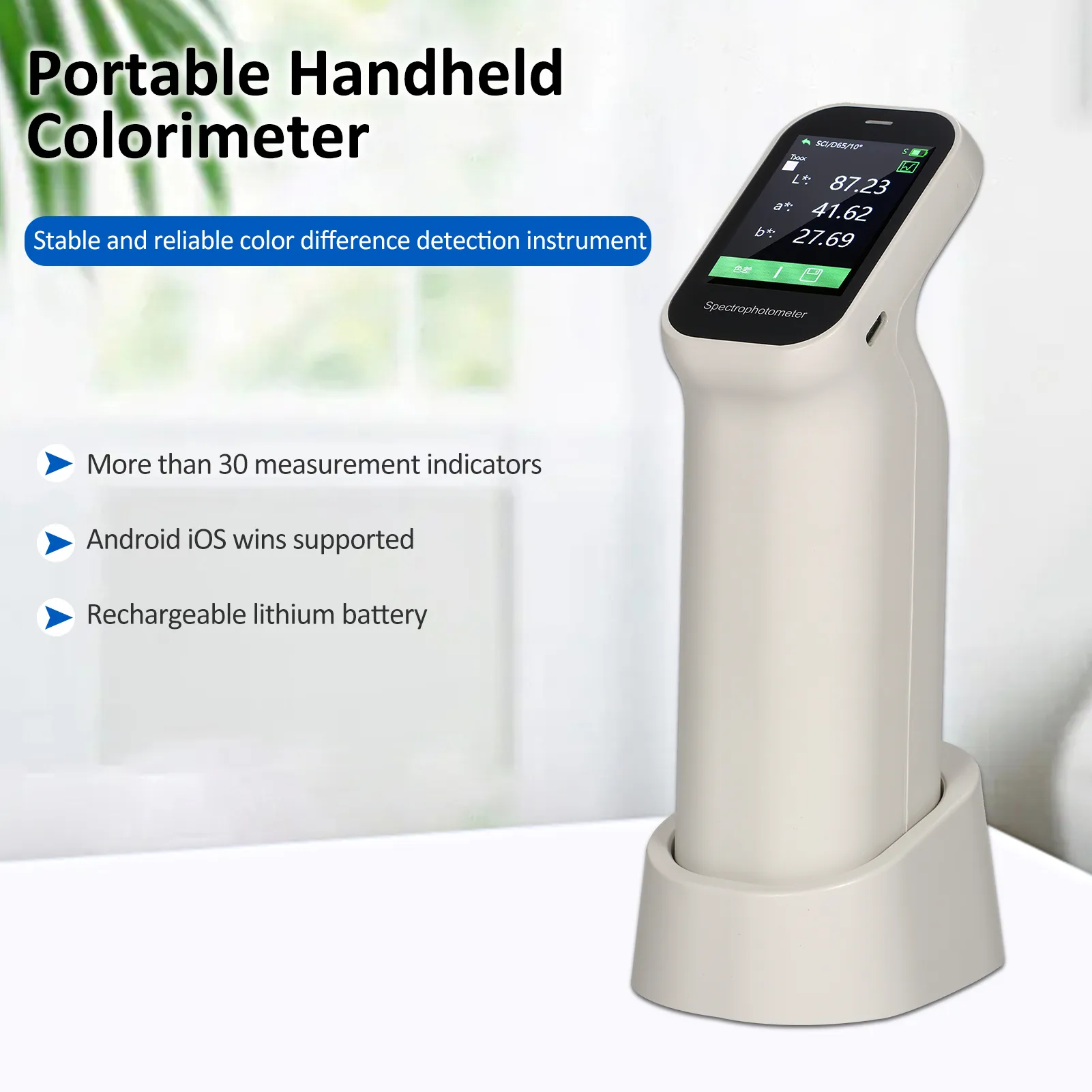

When evaluating a Digital Handheld Spectrophotometer Colorimeter, build quality plays a significant role in long term reliability. Look for devices that use durable housing materials such as reinforced ABS plastic combined with rubberised grips for improved handling. Optical components inside should be protected against dust and minor impacts, as these can affect measurement accuracy over time. In professional environments, sealing and internal calibration stability are indicators of a well engineered instrument. A solid aperture design and stable internal geometry help maintain consistent readings even with frequent use across different surfaces.
Key specifications determine how well the device performs in real world scenarios. Wavelength range, typically covering the visible spectrum from 400 to 700 nanometres, ensures the instrument can capture a full colour profile. Optical geometry such as D8 with SCI mode is important for handling reflective materials. Repeatability values expressed as Delta E provide insight into measurement consistency, with lower values indicating higher precision. While marketing features may highlight display size or connectivity, the core measurement accuracy and optical design remain the most important indicators of performance.
In the Australian market, pricing for a Digital Handheld Spectrophotometer Colorimeter varies depending on precision, build quality, and connectivity features. Entry level models may suit basic tasks, while higher end units provide better repeatability and stability for professional use. Paying slightly more often results in improved reliability, which can save time and reduce material waste. From what we’ve seen, businesses that rely on consistent colour output benefit most from investing in devices that maintain calibration over time rather than focusing solely on initial cost.
This particular Digital Handheld Spectrophotometer Colorimeter stands out due to its combination of portability and measurement precision. The IPS touchscreen provides a clear interface that makes navigation straightforward, especially when switching between measurement modes or reviewing stored data. In a busy workshop or print studio, this reduces the time spent managing settings and allows more focus on actual testing tasks.
The optical system using D8 geometry with SCI measurement conditions ensures that both glossy and matte surfaces can be evaluated accurately. For example, when working with coated metals or printed packaging, surface reflection can influence readings, but this configuration helps minimise inconsistencies. The 6mm aperture size also supports focused measurements on smaller sample areas, which is useful when working with limited material or detailed components.
Fast measurement speed is another practical advantage. Taking readings in about one second allows you to process multiple samples efficiently, which is helpful during batch testing or quality inspections. The inclusion of Bluetooth connectivity means results can be transferred quickly to external systems, supporting digital record keeping and analysis workflows. And with a rechargeable battery, the device remains ready for use across different work environments, from controlled indoor labs to on site inspections.
Compared to more generic colour measurement tools, this model offers stronger alignment between portability and precision. Many basic devices rely on simplified optical systems that may struggle with reflective surfaces or subtle colour variations. In contrast, the inclusion of SCI measurement mode and defined wavelength intervals provides a more detailed spectral analysis.
Higher grade instruments often focus on laboratory use only, limiting mobility. This unit balances both worlds by combining lab level measurement principles with a handheld form factor. The result is a device that meets industry expectations for accuracy while remaining practical for field use, which is an important consideration in Australian industries where mobility is often required.
When you first receive the Digital Handheld Spectrophotometer Colorimeter, begin by fully charging the battery using the Type C cable provided. Once powered on, calibrate the device using the included white calibration reference if supplied. This ensures baseline accuracy before taking any measurements. Place the device firmly against the surface you intend to measure, ensuring full contact with the aperture to avoid ambient light interference.
Navigate the touchscreen interface to select measurement mode, then initiate a reading. Within a second, the device will display results that can be stored internally or transferred via USB or Bluetooth depending on your workflow requirements.
Consistent positioning is key to obtaining reliable readings. Always ensure the aperture sits flush against the sample surface, and avoid movement during measurement. Regular calibration checks help maintain accuracy over time, particularly if the device is used frequently in varying environmental conditions. Keeping the sensor clean and free from dust will also support long term performance. Storing the device in a protective case when not in use helps prevent physical damage during transport.
This Digital Handheld Spectrophotometer Colorimeter suits professionals across several industries in Australia. Print shop operators managing signage or packaging will find it useful for verifying colour accuracy during production runs. Textile manufacturers dealing with dyed fabrics can rely on it to maintain consistency between batches, especially when working with suppliers.
Quality control inspectors in manufacturing environments will appreciate its ability to deliver repeatable measurements during inspections. For small business owners producing custom products, such as branded merchandise or painted components, it helps maintain consistent output that aligns with client expectations.
Even research teams or design studios benefit from its portability when evaluating prototypes or testing materials under different lighting and surface conditions. It fits naturally into workflows that require reliable colour data without being tied to a fixed laboratory setup.
GiftDeal Australia focuses on curating practical tools that suit real working environments rather than generic catalog items. Since 2020, the store has supported customers across Australia with equipment that meets everyday operational needs. Our approach emphasises reliability, clear product information, and responsive customer support, so you can make informed decisions with confidence.
We also maintain a broad range of categories, which allows customers to source complementary tools from a single trusted platform. Whether
you're expanding your workshop setup or upgrading measurement equipment, our catalogue is built to support consistency and convenience
across multiple product types.
Q: What industries commonly use a Digital Handheld Spectrophotometer Colorimeter?
A: This device is widely used in printing, packaging, textiles, automotive refinishing, and plastics manufacturing. It supports quality
control teams by ensuring colour consistency across materials and batches. Laboratories and design studios also rely on it for colour
validation and product development tasks. Instruments like chroma meters and densitometers are often used alongside it for broader analysis.
Q: How accurate is the Digital Handheld Spectrophotometer Colorimeter?
A: Accuracy is supported by optical systems such as D8 geometry and SCI measurement mode, which help reduce inconsistencies from surface
reflections. Repeatability values around Delta E indicate how consistent the readings are across repeated tests. Calibration standards such
as white reference tiles are commonly used to maintain precision. This makes it suitable for professional colour matching tasks.
Q: Can it connect to computers or mobile devices?
A: Yes, it supports both USB and Bluetooth connectivity for data transfer. This allows integration with colour management software and data
logging systems. Many users connect it to laptops or tablets for analysis and reporting. Bluetooth pairing also enables wireless workflows
in production environments.
Q: Is the Digital Handheld Spectrophotometer Colorimeter suitable for outdoor use?
A: It can be used in controlled outdoor conditions, provided the surface is stable and external lighting is managed. Measurements should
ideally be taken in consistent lighting to avoid interference from sunlight. Many users employ portable shading or controlled environments
when testing materials outside. This helps maintain measurement reliability.
Q: What kind of surfaces can it measure?
A: It can measure a wide range of surfaces including painted metals, plastics, textiles, paper, and coated materials. The 6mm aperture
allows focused readings on smaller areas. Glossy and matte finishes can both be evaluated due to the SCI measurement mode. Surface
preparation can further improve consistency.
Q: How long does the battery last during use?
A: The built in 3000mAh lithium battery provides extended operating time suitable for field and lab work. Usage duration depends on
frequency of measurements and data transfers. USB Type C charging allows convenient recharging between sessions. Many users charge it
overnight for daily operations.
Q: Does the device require calibration before every use?
A: Regular calibration is recommended to maintain accuracy, especially when switching environments or after extended use. White calibration
references are commonly used to establish baseline measurements. Some workflows include calibration at the start of each session. This
ensures consistent and reliable results across multiple readings.
Q: What makes this Digital Handheld Spectrophotometer Colorimeter different from basic colour readers?
A: Compared to simpler devices, it provides spectral measurement across defined wavelength intervals, offering more detailed colour data.
Features such as SCI mode and D8 geometry improve accuracy on reflective surfaces. Higher repeatability ensures consistent results across
repeated tests. This makes it suitable for professional and industrial applications.
Q: Can beginners use this device easily?
A: Yes, the IPS touchscreen interface simplifies navigation and operation. Clear menus and intuitive controls reduce the learning curve.
Many users become comfortable after a short familiarisation period. Training materials or guides related to colour measurement terms like
Delta E and wavelength ranges can further assist new users.
We deliver your orders quickly, safely, and securely. Most orders arrive within 7–21 working days. Local deliveries may arrive sooner.
Delivery times may vary based on location, order volume, and courier schedules. Some rural areas may take longer.
If your order hasn't arrived within the estimated timeframe, please contact us: contact@giftdeal.com.au
No FAQs available for this product yet.
Buyer guide not available for this product.