.webp)

Standard delivery charges apply.
Secure handling guaranteed.
DIY Solar Robot STEM Technology brings hands on science straight into your child’s day, turning curiosity into something they can actually build, test, and control. It is not just a toy sitting on a shelf. It moves, reacts, and teaches real concepts like solar energy conversion, motion mechanics, and basic robotics. With three interactive modes, including app remote control and autonomous movement, kids quickly realise how technology works beyond screens. And honestly, watching a solar powered robot come to life under sunlight feels a bit magical. It sparks questions, ideas, and heaps of excitement in a way textbooks rarely do.
Switching between control styles keeps things fresh and engaging. Kids can use app remote control for precise movement, explore autonomous behaviour for independent motion, or simply observe how the robot reacts to light conditions. During a sunny afternoon in the backyard, you will see how quickly they start experimenting with movement patterns. That sense of control builds confidence and keeps them coming back to try new ideas again.
Sunlight becomes the power source, which makes learning about renewable energy feel real. Instead of just reading about solar panels, kids see energy conversion happening right in front of them. Place the robot near a window or outside, and it starts moving as the solar panel absorbs light. That connection between cause and effect sticks with them. And yes, it works best in bright Australian summer conditions, especially from December to February.
Building the robot piece by piece develops patience and problem solving skills. Each component fits together in a way that encourages logical thinking. Younger users may need a bit of guidance at first, but they quickly pick up the process. You will notice improvements in fine motor skills and focus as they assemble gears, panels, and structural parts. It is learning through doing, not just watching.
The body uses strong plastic components that hold up well during repeated assembly and play. Kids are not always gentle, and that is perfectly fine here. The material handles drops, outdoor use, and everyday handling without fuss. Whether it is used indoors on tiled floors or outside on a patio, the structure remains stable and reliable.
This feature adds an unexpected twist. Kids can connect and play audio, which makes the robot feel more interactive and alive. Imagine a robot moving while playing sounds during a small backyard demonstration. It adds a creative layer to the experience, blending entertainment with technology in a way that keeps engagement high.
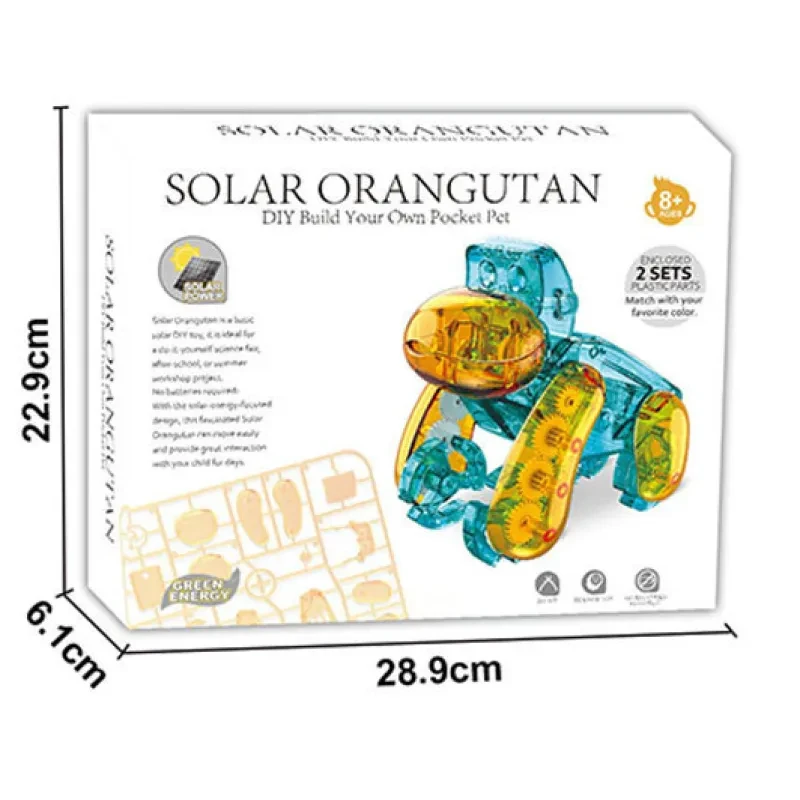
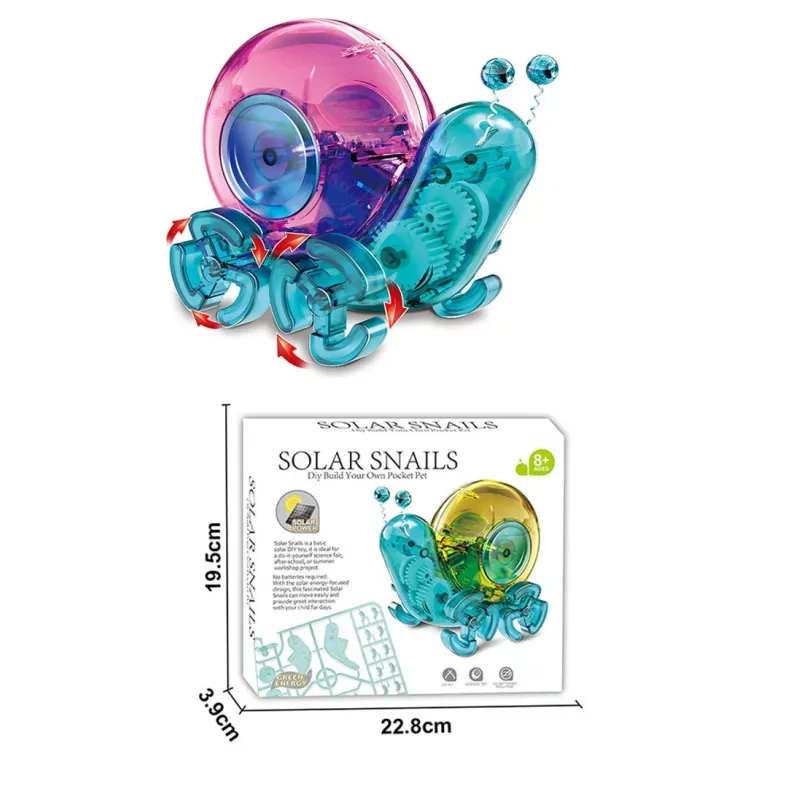
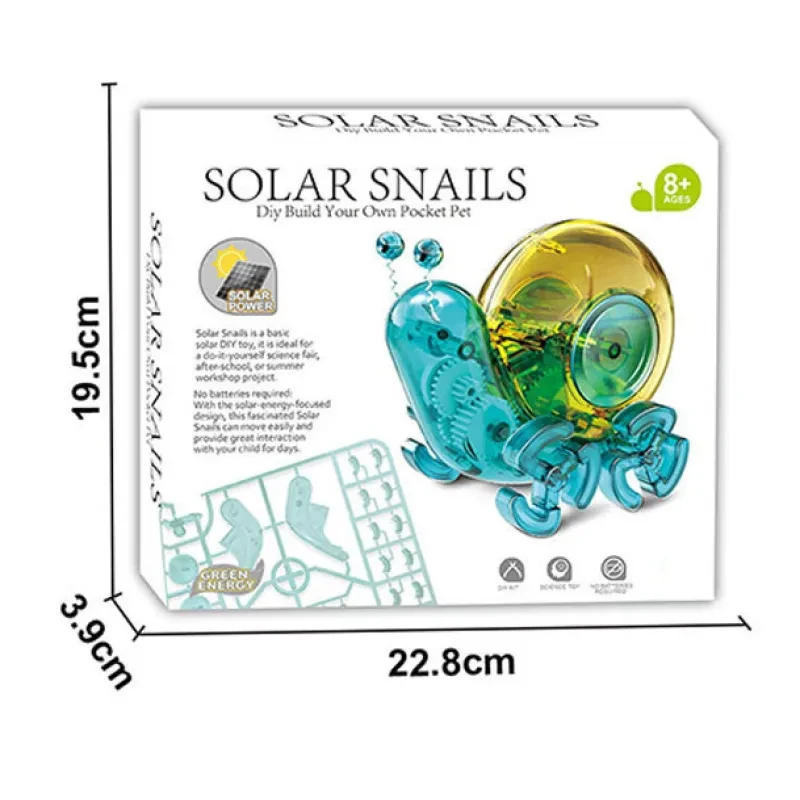
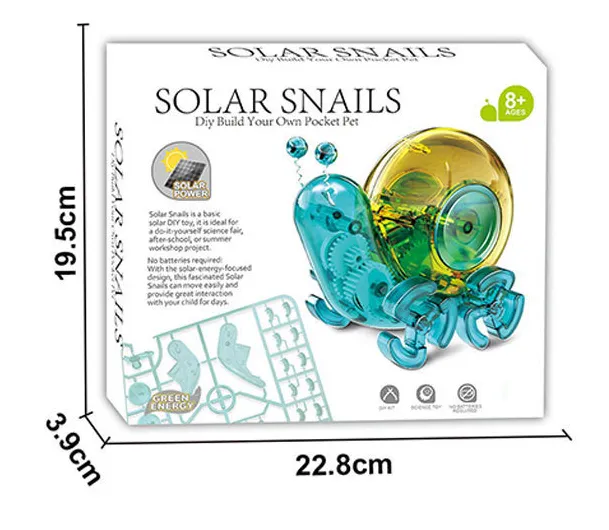
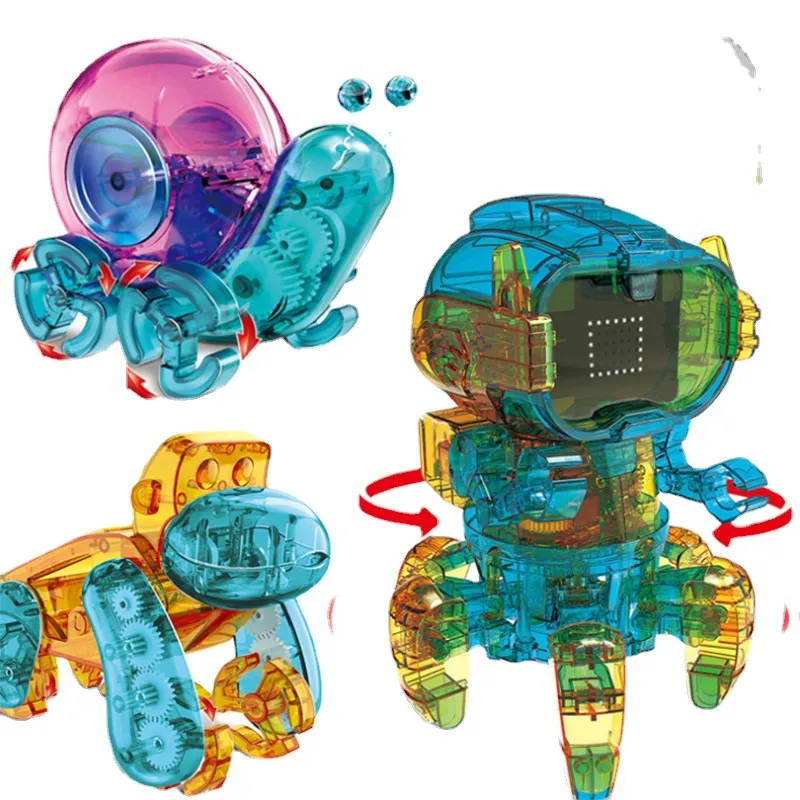
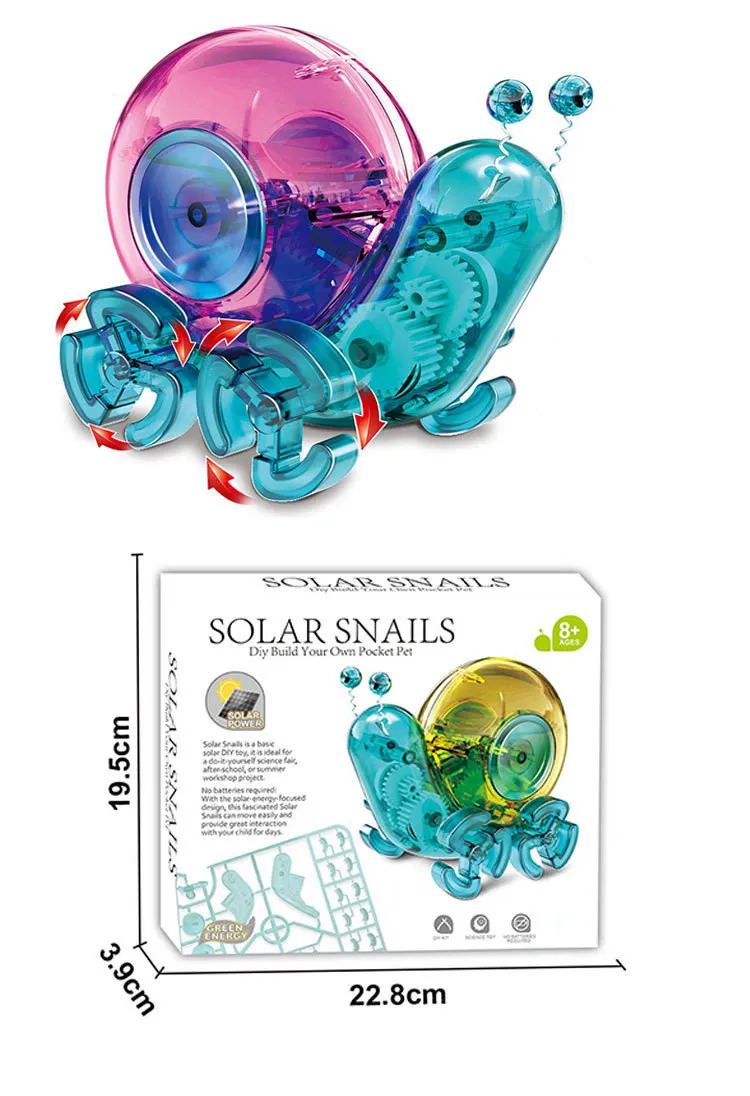
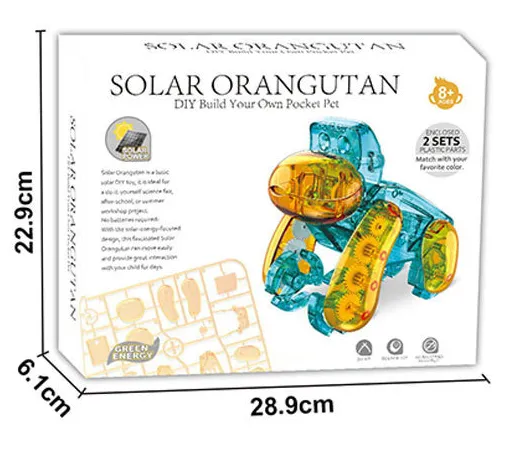
Options like the solar snail or solar orangutan give kids a fun visual choice. These designs make the robot feel less like a technical kit and more like a character. That emotional connection matters, especially for younger users who enjoy imaginative play alongside STEM learning.
This kit fits a wide range of young learners, but a few groups stand out straight away. Parents with curious kids aged seven to fourteen will love how it keeps them engaged during school holidays or weekends. Teachers and homeschoolers can use it as a practical classroom tool to demonstrate physics concepts like energy transfer and motion. Then there are tech curious kids who already enjoy gadgets and apps, this gives them something physical to build and control.
Picture a family spending a Saturday afternoon outside, assembling the robot together, testing it under sunlight, and laughing when it moves unexpectedly. Or a classroom setting where students compare how different light conditions affect performance. It suits real life use, not just theory.
Inside the box, everything needed for assembly is included, so you can get started straight away.
Product specifications include:
Material, durable plastic components
Age suitability, seven to fourteen years
Power source, solar panel system
Control modes, app remote and autonomous movement
Functions, Bluetooth audio playback
Design options, solar snail or solar orangutan
Packaging, colour box with organised components
Each part is shaped for easy handling, making assembly manageable even for beginners. No extra tools are usually required, which makes setup straightforward.
GiftDeal Australia has been helping families find engaging and practical products since 2020, and this kit fits perfectly into that mission. With fast domestic shipping, you will not be waiting weeks to get started. Returns are simple if needed, which gives peace of mind when buying for kids. What stands out here is how carefully selected these educational toys are, focusing on real learning value rather than gimmicks. If you ask us, this is exactly the kind of product that keeps kids curious and busy in a good way.
If your child enjoys this, you might also want to explore other STEM kits, educational building toys, or interactive science experiments available on GiftDeal.

Choosing a quality solar robot kit takes a bit of thought, especially if you want something that lasts beyond a single afternoon. Material quality plays a big role here. Strong plastic components, secure connectors, and well fitted joints make a noticeable difference during assembly and long term use. Kits that include solar panels with decent efficiency ratings tend to perform better in varied lighting conditions. And in Australia, where sunlight can be intense, having a stable panel helps maintain consistent operation.
Durability also matters when kids are involved. Look for smooth edges, solid gear mechanisms, and parts that do not easily warp under heat. Instruction clarity is another factor that often gets overlooked. Clear step by step guides reduce frustration and keep the focus on learning rather than guessing what goes where.
Specifications are where many buyers get overwhelmed, but not all of them are equally important. For a product like DIY Solar Robot STEM Technology, the key elements include power source type, control options, and assembly complexity. Solar panel quality affects how well the robot performs under different lighting conditions, so that is worth paying attention to.
Control modes like app remote or autonomous operation add versatility, giving kids different ways to interact. Age suitability is another crucial point. A kit meant for seven to fourteen years should balance challenge with accessibility. Weight and size also influence usability, especially if the robot will be used outdoors or moved around frequently.
Price can vary quite a bit across STEM kits, but value is what really counts. A slightly higher price often reflects better materials, improved functionality, and a more engaging experience. In the Australian market, where educational toys are in demand, investing in something that offers repeated use makes sense.
Think about how often the kit will be used. If it encourages rebuilding, experimenting, and learning over time, then it offers better long term value. Cheaper kits might seem appealing at first, but they often lack durability or meaningful interaction. Spending a bit more can lead to a far better experience overall.
The features in this DIY Solar Robot STEM Technology kit are what make it stand out in a crowded category. Three interactive modes provide flexibility, allowing kids to switch between direct control and autonomous behaviour. That variety keeps things interesting over time. The solar powered system turns sunlight into motion, creating a direct link between environment and performance.
Bluetooth audio playback adds a creative element that many similar kits do not offer. Kids can personalise their robot experience, making it feel more interactive. Assembly itself becomes part of the learning journey, with each component contributing to the final result. Honestly, the build process is just as fun as watching it move.
Compared to basic STEM kits, this one offers a more dynamic experience. Many alternatives focus only on assembly without adding interactive control features. Here, the combination of solar power, app control, and audio playback creates a richer learning environment.
Generic kits often lack durability or detailed instructions, which can lead to frustration. In contrast, this product balances usability with educational value. It aligns well with modern STEM learning approaches, where hands on experimentation and digital interaction work together.
Getting started with the kit is straightforward. Begin by unpacking all components and laying them out in an organised way. Follow the instruction guide step by step, ensuring each piece is fitted securely. Once assembled, place the robot in a well lit area to activate the solar panel.
For app control, connect via Bluetooth and test basic movement functions. It is a good idea to try different lighting conditions to see how performance changes. This initial setup phase is where most of the learning begins, so take your time and enjoy the process.
To maximise enjoyment, encourage kids to experiment with different setups and environments. Try using the robot at different times of day to observe how sunlight affects movement. Keep components clean, especially the solar panel surface, as dust can reduce efficiency.
Storage matters too. Keep the kit in a cool, dry place when not in use to maintain material quality. Regular reassembly can help reinforce learning, so do not treat it as a one time activity. From what we have seen, kids enjoy rebuilding just as much as the first time.
Families with curious kids will find this kit particularly engaging. It fits well into weekend activities, school holiday projects, or even quiet afternoons at home. Teachers can use it as a practical demonstration tool in classrooms, connecting theory with real world application.
Kids who enjoy gadgets, apps, and hands on building will get the most out of it. Imagine a child setting it up during a backyard barbecue while adults chat nearby, showing off how it moves under sunlight. That mix of play and learning is what makes it special.
GiftDeal Australia focuses on selecting products that genuinely add value to everyday life. Since 2020, the team has built a catalogue that balances fun with practical learning. For this category, that means offering STEM kits that actually engage kids rather than sitting unused.
Customer support is real and responsive, which makes a difference if you have questions during setup. Fast domestic shipping ensures you get your order quickly, and returns are easy if needed. The range of educational toys available also means you can explore more options as your child’s interests grow.
Q: How does the DIY Solar Robot STEM Technology work in different lighting conditions?
A: The robot uses a solar panel to convert light into energy, which powers its movement and functions. In bright sunlight, performance is
strong and consistent, especially outdoors. Indoor lighting can also activate it, though movement may be slower. This variation actually
helps kids understand how light intensity affects energy output.
Q: Is the assembly process suitable for beginners?
A: Yes, the kit is structured to guide children through each step with clear instructions and manageable components. Younger users may need
some help at the start, but most quickly gain confidence. The process builds patience and practical skills over time. It is a rewarding
experience that improves with practice.
Q: Can the robot be used indoors as well as outdoors?
A: Indoor use is possible near bright windows or under strong lighting conditions. Outdoor use in natural sunlight delivers the best
results, especially during clear days. Many families enjoy testing both environments to compare performance. It works well on smooth indoor
floors or outdoor surfaces like patios.
Q: What age group is best for this toy?
A: The kit is ideal for children aged seven to fourteen, balancing challenge with accessibility. Younger children can participate with
supervision, while older kids often explore advanced features independently. It suits both beginners and those already interested in STEM
topics. The learning curve feels natural and engaging.
Q: Does the product require batteries or charging?
A: The main power source is solar energy, so it does not rely on traditional batteries for movement. This makes it more engaging as kids
learn about renewable energy. Some features like Bluetooth connectivity may use internal power systems. Overall, it keeps dependency on
external charging minimal.
Q: How durable is the robot after multiple uses?
A: The plastic components are built to handle repeated assembly and regular play. With proper care, the structure remains stable even after
multiple rebuilds. It is suitable for both indoor and outdoor use without losing performance. Keeping parts clean helps maintain long term
durability.
Q: What makes DIY Solar Robot STEM Technology a good educational tool?
A: It combines physics concepts, mechanical assembly, and interactive control in one experience. Kids learn by building, testing, and
observing results in real time. This approach strengthens understanding far more than passive learning. It encourages curiosity and hands on
exploration in a practical way.
We deliver your orders quickly, safely, and securely. Most orders arrive within 7–21 working days. Local deliveries may arrive sooner.
Delivery times may vary based on location, order volume, and courier schedules. Some rural areas may take longer.
If your order hasn't arrived within the estimated timeframe, please contact us: contact@giftdeal.com.au
No FAQs available for this product yet.
Buyer guide not available for this product.