

Computer & Office
Upgrade Your Workspace
Discover premium computer essentials and office supplies designed to boost your productivity and style.
Explore Gear
.webp)
Discover premium computer essentials and office supplies designed to boost your productivity and style.
Explore Gear
Standard delivery charges apply.
Secure handling guaranteed.
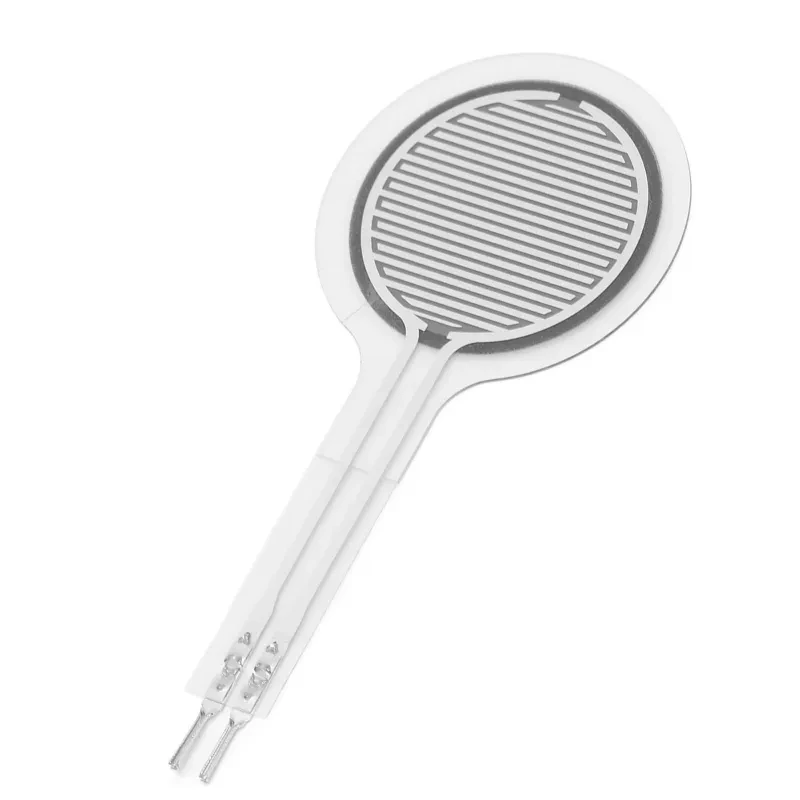
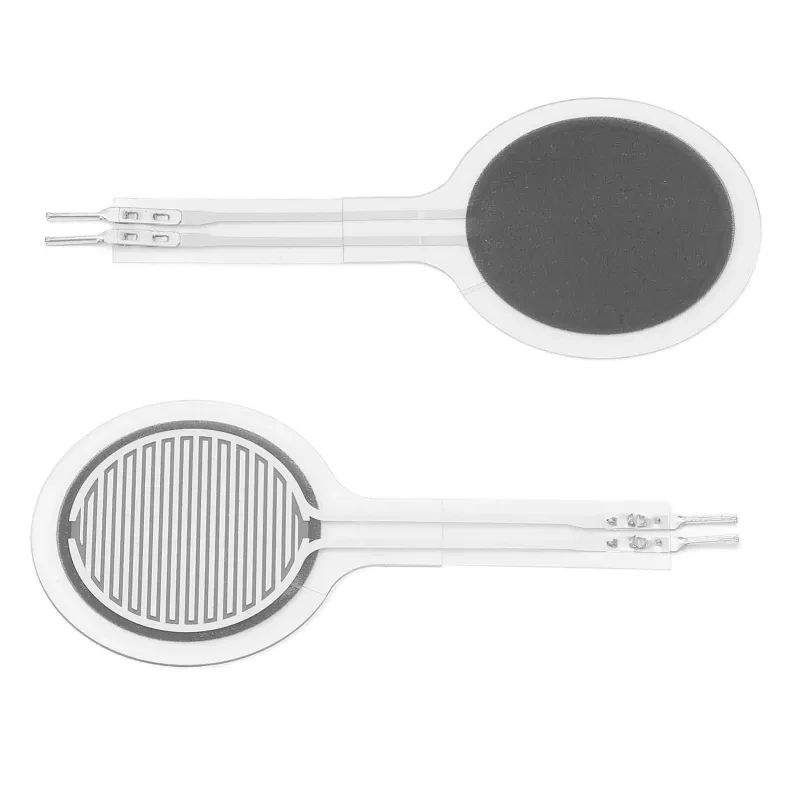
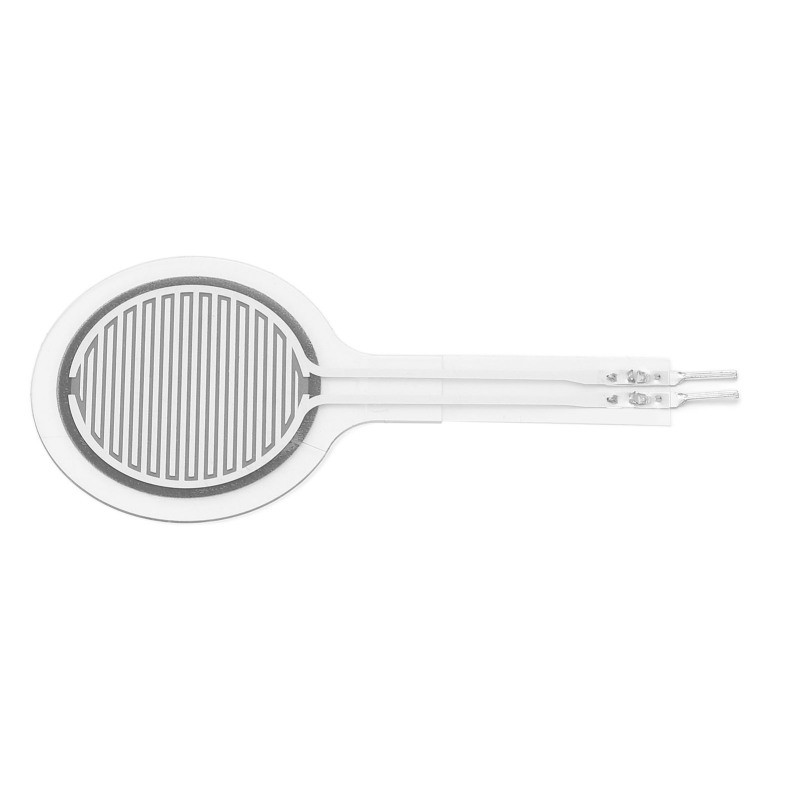
The Precision Flex Force Transducer is a breakthrough in tactile sensing technology designed for modern industrial and medical automation. Integrating a high-sensitivity nanomaterial substrate, this 50KG capacity sensor translates physical pressure into measurable electrical resistance with incredible accuracy. Whether you are developing a smart prosthetic limb or a sophisticated automotive seating system, this Precision Flex Force Transducer offers the thin profile and durability required for seamless integration into flexible surfaces. Its waterproof construction ensures that environmental factors like humidity or sweat do not interfere with the data integrity, making it a top choice for wearable tech.
The core of this sensor lies in its sophisticated multilayered construction. Unlike traditional bulky load cells, the Precision Flex Force Transducer utilizes a specialized ink-based piezoresistive element. When no pressure is applied, the initial resistance remains above 10MΩ, effectively acting as an open circuit. As force is applied to the active sensing area, the conductive particles within the nanomaterial are pressed closer together, significantly dropping the resistance. This linear-to-logarithmic relationship allows controllers like Arduino or ESP32 to map force with high resolution, providing real-time feedback for critical monitoring tasks.
To ensure you get the best performance from your hardware, we have detailed the electrical and physical characteristics of the sensor in the table below. These parameters are essential for calibrating your analog-to-digital converters (ADC).
| Parameter | Value | Unit |
| Rated Force Range | 0 to 50 | Kilograms |
| Total Thickness | Less than 0.60 | Millimeters |
| Activation Point | 500 or less | Grams |
| Response Speed | Under 1 | Milliseconds |
| Recovery Duration | Under 15 | Milliseconds |
| Operational Temp | -20 to 60 | Celsius |
| Standby Resistance | Greater than 10 | Megohms |
| Service Life | Over 1,000,000 | Actuations |
The versatility of this component spans multiple high-tech industries. In the realm of automotive electronics, it is frequently used for occupant detection systems to ensure airbags deploy only when necessary. In the smart home sector, these sensors are embedded under floor mats or bed sheets to monitor presence and sleep patterns without being intrusive. Furthermore, the new energy sector utilizes these transducers to monitor battery pack expansion or structural stress in solar panel mounts. Its waterproof nature allows it to be used in outdoor weather stations where moisture ingress is a constant threat.
Integrating the sensor into your project requires a simple voltage divider circuit. By placing the transducer in series with a fixed resistor (usually 10k or 47k ohms), you can measure the voltage drop across the sensor. As the pressure increases and the resistance of the Precision Flex Force Transducer decreases, the output voltage changes. This analog signal can be easily processed by any microcontroller. For high-precision applications, we recommend using an Operational Amplifier (Op-Amp) in a non-inverting configuration to buffer the signal and reduce noise interference, ensuring that your 0-50KG readings remain stable even in electrically noisy environments.
[BUYER_GUIDE]
Selecting a force sensor is not just about the weight limit; it is about understanding the mechanical interaction between the object and the sensing surface. When you are looking at a 50KG capacity sensor, you must consider the "Response Point." This sensor activates at 500g, which means it is sensitive enough to detect a light touch but robust enough to handle the weight of a heavy suitcase or a human sitting down. If your application involves constant vibrations, such as in automotive engines, the nanomaterial construction of this sensor is superior to mechanical switches because it has no moving parts to wear out. You should also evaluate the active sensing diameter; a larger diameter allows for more margin of error in load placement, which is critical for DIY projects or rapid prototyping.
Durability is another cornerstone of a wise purchase. With a lifecycle rating of over one million presses, this transducer is built for longevity. If you are designing a product for mass production, the cost-to-life ratio is much better than cheaper, non-branded alternatives. You also need to look at the environmental sealing. Many sensors fail because of oxidation or moisture seeping into the silver traces. This model features a high-grade waterproof coating that protects the sensitive nanomaterials. This makes it ideal for medical environments where equipment must be sanitized frequently or for sports science applications where perspiration is a factor. Always ensure that your mounting surface is smooth and flat, as any sharp burrs can puncture the 0.60mm thin film, leading to a short circuit or inaccurate data.
Furthermore, the "Recovery Time" is a spec that many buyers overlook. A recovery time of less than 15ms means the sensor is ready for the next reading almost instantly. This is vital for high-speed counting on assembly lines or for gaming peripherals where rapid-fire inputs are required. If the sensor takes too long to return to its high-resistance state, your system will miss data points. Therefore, for any application involving dynamic loads, this sensor's quick recovery is a game-changer. Lastly, consider the ease of connection. The two-pin flexible lead is designed for crimp connectors or soldering to a PCB. However, we recommend using a specialized FPC connector if your design requires frequent assembly and disassembly to prevent fatigue on the delicate silver traces.
Finally, think about the EMI and ESD protection. In an era where everything is wireless, electromagnetic interference can wreak havoc on sensitive analog signals. This sensor is inherently resistant to EMI because it does not contain inductive coils or complex circuitry that acts as an antenna. Its ESD neutrality means you won't have to worry about static shocks from carpets or clothing damaging the internal structure of the nanomaterial. When you combine all these factors—sensitivity, durability, speed, and environmental resistance—it becomes clear that this transducer is a professional-grade component. Whether you are an engineer at a Fortune 500 company or a hobbyist building your first robot, investing in a high-quality sensor saves hours of troubleshooting and calibration frustration in the long run.
[FAQS]
Q: Can this sensor be used to measure the exact weight on a scale?
A: While it is highly sensitive, thin-film sensors are generally better for detecting changes in pressure and relative force rather than serving as a legal-for-trade weighing scale. For precise weight measurement, a rigid load cell is usually preferred, but for space-constrained force detection, this sensor is excellent.
Q: Is the sensor's surface resistant to scratches or punctures?
A: The sensor is made of flexible nanomaterials and is quite thin. While it is durable, it should be protected from sharp objects. We recommend placing a thin piece of rubber or plastic over the active area to distribute the load and prevent physical damage.
Q: Does it require a specific library to work with Arduino?
A: No special library is required. You can use the standard analogRead function. However, you will need to write a simple mathematical function or use a map function to convert the analog voltage values into kilograms or Newtons based on your calibration.
Q: Can I cut the sensor to a smaller size if needed?
A: You should never cut the active sensing area or the traces leading to the pins. Cutting the sensor will break the conductive path and render the device non-functional.
Q: What is the maximum voltage I can pass through the sensor?
A: Typically, these sensors are used with 3.3V or 5V logic. It is not designed to carry high current or high voltage. It should only be used as a variable resistor within a low-power signal circuit.
Q: Is the sensor affected by temperature changes?
A: The sensor is rated for -20°C to 60°C. Within this range, it remains stable. However, extreme temperatures outside this range may affect the flexibility of the film and the conductivity of the nanomaterial, leading to slight drift in readings.
Q: How do I mount this sensor to a flat surface?
A: The best way to mount it is using a thin double-sided adhesive on the back of the sensor (the non-active side). Ensure the active sensing area is free to compress against the target object for the best results.
Q: Can it detect the impact of a falling object?
A: Yes, because it has a response time of less than 1ms, it is very capable of capturing high-speed impact forces, provided the force does not exceed the 50KG physical limit of the sensor.
We deliver your orders quickly, safely, and securely. Most orders arrive within 7–21 working days. Local deliveries may arrive sooner.
Delivery times may vary based on location, order volume, and courier schedules. Some rural areas may take longer.
If your order hasn't arrived within the estimated timeframe, please contact us: contact@giftdeal.com.au
No FAQs available for this product yet.
Buyer guide not available for this product.